
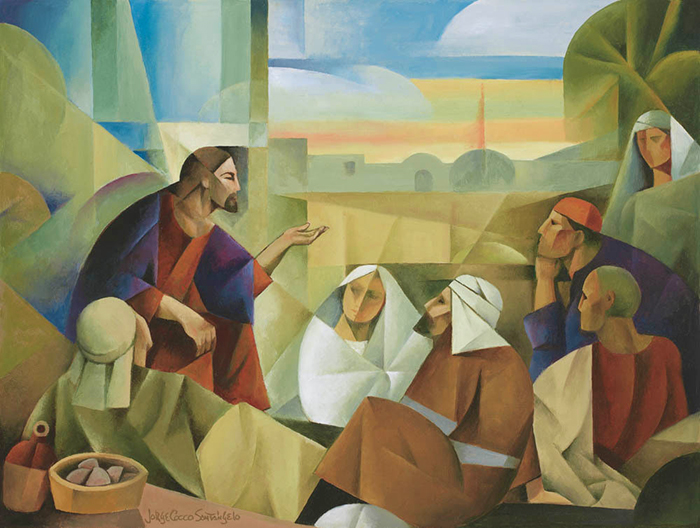
Jesus tells this parable in Jerusalem after the chief priests and elders challenge his authority. He responds with a story they can judge for themselves. A father asks each of his two sons to work in the vineyard. The first refuses, but later changes his mind and goes. The second politely agrees, but never goes.
The answer to Jesus’ question seems obvious: the first son did his father’s will. Yet the answer also exposes the distance between saying the right thing and doing it.
The first son’s refusal is real. Jesus does not call it good or pretend it never happened. What matters is that his refusal does not become his final answer. He changes his mind and goes to the vineyard.
The second son’s words are respectful, but his promise bears no fruit. Jesus directs this warning toward religious leaders who saw others respond to John yet did not change their minds and believe him.
This is an uncomfortable part of the parable for anyone active in the Church. We can speak sincerely about faith, know its practices, and still resist a particular invitation from God. Jesus is not dismissing prayer, teaching, or worship. He is asking whether they lead us to do the Father’s will.
The vineyard is where the father has asked his sons to go. For us, the question becomes concrete: Where is God asking me to act on the love I profess?
Perhaps it is in forgiving someone, telling the truth, serving a person whose needs interrupt our plans, or returning to prayer after a long absence. Jesus’ life shows what obedience to the Father looks like in full: he draws near to sinners, gives himself for others, and remains faithful even through the Cross. Following him means allowing his love to move from our words into our choices.
The parable leaves room for us to recognize ourselves in both sons. We may remember a time when we resisted God and later responded. We may also hear a promise we have made but have yet to live.
Jesus’ question is an invitation to honesty, not despair. The first son’s story reminds us that we can still go.