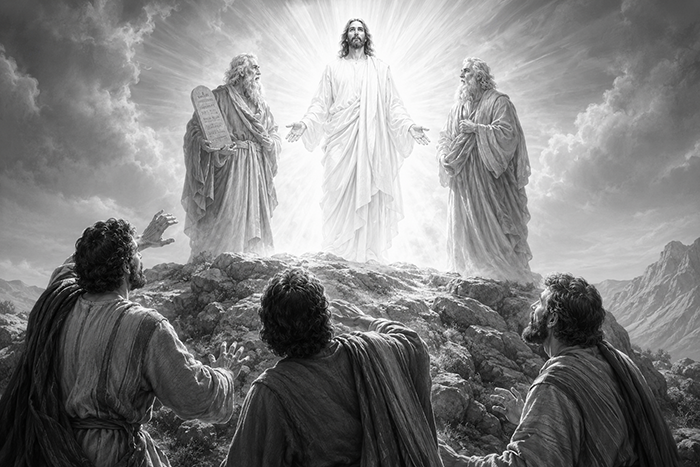
Jesus knew that His disciples would soon witness the scandal of the Cross. Before leading them into the darkness of Calvary, He led Peter, James, and John up a mountain where His hidden glory was revealed. His radiant face and dazzling garments unveiled what had always been true: Jesus is the eternal Son of God.
Standing beside Him were Moses and Elijah, representing the Law and the Prophets. Their conversation about His coming “exodus” revealed that His death in Jerusalem was not a failure but the fulfillment of God’s saving plan. The first Exodus freed Israel from slavery in Egypt; Christ’s Passion would bring about a new Exodus, freeing humanity from the slavery of sin.
Peter wanted to remain on the mountain, but discipleship cannot remain in moments of spiritual consolation. Faith must descend into everyday life, carrying the light of Christ into a world marked by suffering and hope. Then the Father’s voice spoke from the cloud: “This is my beloved Son…Listen to Him.” The command is timeless. We are called to trust Christ not only in moments of glory, but also when He leads us along the way of the Cross.
Every celebration of the Mass reflects this mystery. We ascend into God’s presence, listen to His Son in the Scriptures, encounter Christ in the Eucharist, and then return to the world transformed for mission. The mountain prepares us for the valley; worship prepares us for witness.
The Transfiguration reminds us that the glory of Christ is not separate from the Cross but revealed through it. Whenever life becomes difficult, we remember the mountain and trust that the One who walks with us in suffering is also the Lord of eternal glory. Our task is simple, yet lifelong: listen to Him, follow Him, and allow His glory to shine through our lives.
In Paul’s Letter to the Romans, he is not condemning the human body, nor is he teaching that Christians should despise physical life. Rather, he is describing two fundamentally different ways of living—one centered on the self and one centered on God.
To live according to the flesh is to make oneself the ultimate reference point for life. In Paul’s language, “the flesh” refers not simply to our physical bodies but to our fallen human nature apart from God’s grace. It is life governed by self-interest, pride, fear, pleasure, power, resentment, or the endless pursuit of control. A person living according to the flesh may appear outwardly successful, moral, or even religious, but inwardly remains centered on “my will” rather than God’s will. Such a life gradually closes the heart to God and others. It promises freedom but often leads to anxiety, addiction, loneliness, and spiritual death because the soul was created for communion with God, not independence from Him.
To live according to the Spirit, on the other hand, is to allow the Holy Spirit to shape one’s thoughts, desires, decisions, and relationships. This does not mean becoming perfect overnight or never experiencing temptation. It means allowing God’s grace to transform the heart little by little. The Christian begins asking different questions: What is God asking of me? How can I love more faithfully? How can I forgive? Where is Christ leading me today? Life in the Spirit is characterized by humility, trust, charity, self-control, mercy, and hope. It is not merely about avoiding sin but about becoming more like Christ.
The difficulty is that living by the flesh feels natural, while living by the Spirit requires conversion. From our earliest years, we instinctively protect ourselves, seek comfort, compare ourselves with others, and satisfy immediate desires. Our culture often reinforces these instincts, celebrating self-expression and self-gratification as the highest goods. Because of this, many people mistake the impulses of the flesh for genuine freedom. They assume that following every desire is authentic living, when in reality it often becomes a new form of slavery.
Living by the Spirit, on the other hand, is also difficult to understand because God’s way often appears contrary to ordinary human logic. The Spirit teaches that greatness comes through service, that strength is found in humility, that forgiveness is more powerful than revenge, that generosity enriches more than accumulation, and that surrender to God brings deeper freedom than self-rule. These truths are not easily grasped because they must be learned through experience, prayer, and grace. The Spirit forms us gradually, often through trials, disappointments, and acts of daily fidelity rather than dramatic moments.
This transformation from living in the flesh to living in the Spirit is rarely instantaneous. It is the lifelong work traditionally called sanctification. Every act of repentance, every sincere confession, every choice to forgive instead of resent, every hidden act of charity, and every moment of faithful prayer is another step away from life according to the flesh and toward life in the Spirit. We discover that holiness is not simply avoiding evil but allowing Christ to live more fully within us.
Paul’s words today offer encouragement as much as challenge. Most believers recognize both realities within themselves. We know the attraction of selfishness, comfort, and pride, yet we also experience the quiet prompting of the Holy Spirit calling us toward something greater. The Christian life is lived in that tension. The measure of holiness is not that we never struggle with the flesh, but that we increasingly choose to cooperate with the Spirit. Each day presents countless opportunities to die a little to self so that the life of Christ may become more visible in us.
Jesus’ words in our reflection verse today are so familiar that we can easily underestimate their depth. Often called the “Golden Rule,” this teaching is not simply a guide to being polite or fair. It is a summary of the entire moral life. Jesus concludes the verse by saying, “This is the Law and the Prophets,” meaning that much of what God desires for human relationships is contained in this simple command.
At its heart, the Golden Rule invites us to place ourselves in another person’s situation and ask: How would I hope to be treated if I were in their place? If I were struggling, I would want patience rather than criticism. If I had failed, I would hope for mercy rather than condemnation. If I were lonely, I would want someone to notice me. If I were grieving, I would want compassion more than advice. In this way, Jesus asks us to become the kind of people who freely offer to others the very things we most desire for ourselves.
The Golden Rule becomes practical in countless ordinary moments. It is lived when we listen attentively rather than waiting for our turn to speak. It is practiced when we forgive an offense because we know how much we ourselves need forgiveness. It is expressed when we speak truthfully, honor commitments, show kindness to service workers, remain patient with family members, or give someone the benefit of the doubt. In daily life, most opportunities to live the Golden Rule do not come in dramatic moral tests; they appear in ordinary interactions.
Yet living this teaching is often difficult because it challenges some of our deepest instincts.
One challenge is self-centeredness. We naturally see the world through our own needs, fears, and desires. It takes intentional effort to consider another person’s experience with the same seriousness we give our own.
A second challenge is hurt and resentment. When we have been wounded, our first impulse is often to protect ourselves or seek repayment. We may think, “Why should I treat them kindly when they have not treated me kindly?” Yet Jesus does not tell us to treat others as they treat us. He tells us to treat them as we ourselves would hope to be treated.
A third challenge is judgment. We often know only a small part of another person’s story. The difficult coworker, the impatient driver, the struggling family member, or the person who disappoints us may be carrying burdens we cannot see. The Golden Rule invites us to approach others with humility and mercy rather than quick conclusions.
Perhaps the greatest challenge is that Jesus calls us beyond mere fairness into genuine love. Fairness asks, “What does this person deserve?” Love asks, “What does this person need?” So the Golden Rule is not simply about balancing accounts; it is about reflecting the generous heart of God.
From a Christian perspective, the deepest way to practice the Golden Rule is to remember how God has treated us. We receive mercy we have not earned, forgiveness we do not deserve, patience in our weakness, and love in our brokenness. Because we have received these gifts, we are called to extend them to others. In this sense, the Golden Rule is not merely a moral principle; it is a response to grace. A simple but effective way to begin each day might be with a simple prayer:
“Lord, help me today to see others as You see them. Let me speak the words I would need to hear, offer the patience I would hope to receive, and extend the mercy that You so generously give to me.”
When practiced consistently, the Golden Rule gradually transforms not only our relationships but also our hearts. We become less concerned with protecting ourselves and more concerned with loving others. As we do so, we begin to resemble Christ Himself, who perfectly lived this command by giving to humanity what He would desire for Himself: compassion, forgiveness, dignity, and ultimately, self-giving love.
Jesus’ words invite us to examine not simply what we possess, but what possesses us. In the Sermon on the Mount, Jesus contrasts earthly treasures, which are temporary, vulnerable, and ultimately unable to satisfy the deepest longings of the human heart, with heavenly treasures, which endure eternally because they are rooted in God Himself.
Consider a young couple welcoming their first child. Before the child is born, they begin to rearrange their home, purchase a crib, read books, discuss names, and imagine the future. Their time, energy, money, and attention increasingly revolve around this new life. Why? Because their treasure is there. Their hearts follow their investment. The more they give themselves to the child, the deeper their love grows.
The same principle applies in our relationship with God. Many people wait until they “feel” closer to God before committing more time to prayer, worship, or service. Yet Jesus suggests the opposite. When we intentionally invest ourselves in the things of God—attending Mass faithfully, spending time in prayer, serving those in need, studying Scripture, or participating in the life of the Church—our hearts gradually follow. We begin to desire God more because we are placing our treasure in Him.
A parishioner once shared that after retirement, he intended to spend more time with God. Yet he found himself filling every day with hobbies, television, travel, and household projects. None of these things were wrong, but he noticed that God continually received whatever time was left over. One day, he decided to begin each morning with fifteen minutes of prayer before doing anything else. At first, it felt like an obligation. Months later, he realized something had changed. His prayer time had become the most important part of his day. His treasure had shifted, and his heart had followed.
Perhaps the most moving example is found at the end of many lives. Rarely does someone say, “I wish I had spent more time at the office” or “I wish I had accumulated more possessions.” Instead, people often speak of relationships, faith, forgiveness, love, and the moments they encountered God. In those final reflections, the true treasures of the heart become clear.
Jesus’ words are therefore not so much a warning as an invitation. He is gently asking us to place our treasure where it will last forever. Every prayer, every act of kindness, every moment spent loving God and neighbor is like placing another coin in the treasury of heaven. As we do so, our hearts are gradually drawn toward God Himself, until one day we discover that He was the treasure we were seeking all along.
At the heart of the Christian faith stands this astonishing proclamation: death no longer has the final word. Through His Passion, Death, and Resurrection, Jesus Christ entered into humanity’s greatest enemy—not to escape it, but to conquer it from within. The cross, once a symbol of shame and defeat, became the very instrument of victory. By rising from the dead, Christ shattered the power of sin and death, opening the way to eternal life for all who believe in Him.
When St. Paul says that Christ has “destroyed death,” he does not mean that physical death has disappeared. Christians still experience the sorrow of death, but its meaning has been transformed. Death is no longer an impassable wall separating humanity from God; instead, because of Christ, it has become a doorway into the fullness of life. As the Church proclaims in the funeral liturgy, “Indeed for your faithful, Lord, life is changed, not ended.”
Paul also tells us that Christ has “brought life and immortality to light through the Gospel.” The Gospel is not merely a collection of teachings or moral principles; it is the joyful announcement that God has acted decisively in history to save His people. Through the life, death, and resurrection of Jesus, the hidden mystery of God’s eternal plan has been revealed. Humanity now sees clearly what was once only hoped for: that we are created not for the grave, but for communion with God forever.
This promise reshapes the way Christians live in the present. If Christ has conquered death, then fear no longer governs our lives. We are free to love generously, forgive completely, sacrifice courageously, and persevere through suffering with hope. Every act of faith, every work of charity, and every moment of faithful endurance thus participates in the victory Christ has already won.
This verse also reminds us that eternal life begins now. Through Baptism, we already share in Christ’s risen life. Through the Eucharist, we receive the Bread of Life, a foretaste of the heavenly banquet. Through the Holy Spirit, we are continually transformed into the likeness of Christ. Therefore, the Gospel is not simply a promise for the future—it is the power of God at work in the present, illuminating our lives with the hope of resurrection.
As followers of Christ, we are called to become witnesses of this hope. In a world often marked by fear, despair, and uncertainty, Christians proclaim with confidence that life has triumphed over death because Jesus Christ lives. Our mission is to reflect His light through lives of faith, hope, and love, and to invite others to discover the same victory revealed in the Gospel.
These words from Mark’s Gospel, which we reflect upon today, occur at a pivotal moment in the Gospel. The disciples James and John are arguing about greatness, status, and authority, and about their desire to have places of honor beside Jesus, imagining the Kingdom of God in terms of power and prestige. Jesus overturns their understanding completely. In the Kingdom of God, greatness is not measured by domination, but by self-giving love. Leadership is not about being elevated above others, but about kneeling before them in service.
For the early Christians, this teaching would have been both revolutionary and deeply consoling. They lived in a world shaped by the power structures of the Roman Empire, where social rank, wealth, and political authority determined a person’s value. Into that culture came the message of a crucified Messiah — a Savior who washed feet, touched lepers, welcomed the poor, and surrendered his life rather than preserving it. The earliest believers understood that discipleship meant imitation of Christ. To follow Jesus was not simply to admire him, but to participate in his pattern of life: humility, sacrifice, and love poured out for others.
For the twenty-first-century Christian, these words remain just as challenging. Modern culture often measures success by achievement, influence, visibility, and personal fulfillment. Even within religious life, there can be a temptation to seek recognition, control, or moral superiority. Jesus confronts these tendencies directly. The Christian life is not centered on self-promotion but on self-donation. To serve in the spirit of Christ means to place the dignity and needs of others before our own ego and ambition.
This teaching calls Christians today to live differently in families, workplaces, parishes, and society. Parents who sacrifice daily for their children, caregivers who accompany the sick, ministers who quietly serve without recognition, and people who work for justice and peace all embody the servant heart of Christ. The Gospel reminds believers that holiness is often found not in dramatic acts, but in ordinary faithfulness, compassionate service, and small acts of kindness.
At a deeper spiritual level, this verse invites Christians to ask a difficult question: Am I seeking to be served, or am I learning to serve? Jesus reveals that true freedom comes not from protecting oneself at all costs, but from giving oneself away in love. In a world marked by loneliness, division, and competition, the witness of humble service becomes profoundly countercultural.
To understand this command, we must first understand what “holy” means. In Scripture, holiness means being “set apart” for God, transformed by His presence, and conformed to His love, truth, and goodness. God alone is perfectly holy by nature. Human beings do not manufacture holiness on their own; rather, holiness is something received, cultivated, and lived through communion with God.
This is important because many people imagine holiness as perfectionism, moral superiority, or an unattainable spiritual status reserved for saints and mystics. But biblical holiness is fundamentally relational before it is behavioral. A believer becomes holy not by pretending to be divine, but by drawing near to the One who is holy.
Jesus Himself reveals how this transformation happens. In the Gospel of John, He says, “Abide in me, and I in you.” Holiness grows through union with Christ. Just as a branch receives life from the vine, the soul receives divine life through prayer, worship, Scripture, the sacraments, acts of charity, repentance, and continual surrender to God’s grace. The Christian life is therefore not self-improvement alone; it is participation in the life of God.
The process of becoming holy is gradual and lifelong. Peter is not commanding instant perfection. Rather, he is calling believers into continual conversion. Holiness is learned in daily fidelity: choosing forgiveness over resentment; truth over deceit; humility over pride; purity over selfish desire; compassion over indifference; faithfulness over compromise. In this sense, holiness is not an escape from ordinary life; it is the transformation of ordinary life by divine love.
The Holy Spirit is the sanctifier, the One who slowly reshapes the human heart into the likeness of Christ. Believers cooperate with grace, but grace comes first. This is why holiness ultimately begins with surrender: admitting our need for God; allowing Him to transform what is broken within us; and trusting that He can make saints out of imperfect people.
The command “Be holy because I am holy” is therefore not merely a demand; it is also a promise. The God who calls His people to holiness also gives them the grace to become what He calls them to be.
A likeness of the Holy Spirit is seen at the Cathedral of St. Paul in St. Paul, Minnesota.
The ancient prayer, “Prayer to the Holy Spirit,” is one of the most profound invocations in Christian spirituality. During the great feast of Pentecost, this prayer becomes especially meaningful, as it celebrates the fulfillment of Christ’s promise to send the Holy Spirit upon his disciples.
The prayer begins with the word “Come.” This is the cry of a Church that recognizes its dependence upon God. The next phrase, “fill the hearts of the faithful,” speaks to the deeply personal nature of the Spirit’s work. The image of fire is especially powerful in the Pentecost story. Fire in Scripture symbolizes both God’s presence and God’s purifying action.
The disciples gathered in the upper room after the Ascension were fearful, uncertain, and incomplete. Though they had seen the risen Christ, they still lacked the courage and power necessary for their mission. Pentecost reveals that Christianity is not merely a system of beliefs or moral teachings; it is life animated by the Spirit of God. The Church does not generate its own holiness or mission. The Spirit must come first.
The prayer asks the Spirit to “kindle in them the fire of your love.” This is crucial because the Spirit is not given merely for power, knowledge, or spiritual experience. The deepest sign of the Spirit’s presence is love. The apostles emerged from the upper room not as conquerors, but as witnesses of divine love. The Spirit enables believers to love as Christ loved: sacrificially, courageously, and universally.
Pentecost is not only a historical event remembered by the Church; it is an ongoing reality. Every generation of Christians must pray again, “Come, Holy Spirit.” The Church continually needs renewal, courage, wisdom, unity, and holiness. Every believer experiences moments of spiritual dryness, fear, confusion, or discouragement that require the rekindling fire of God’s presence.
This prayer is also deeply missionary. Immediately after receiving the Spirit, the apostles went forth to proclaim the Gospel to all nations. The Spirit always sends believers outward. A heart filled with divine fire cannot remain closed in upon itself. Pentecost transforms disciples into evangelists, fear into boldness, and isolation into communion.
The prayer expresses the deepest longing of the Christian life: that God’s own love might dwell within humanity and radiate outward into the world. Pentecost reminds the faithful that Christianity began not through human strength, but through divine fire, and that the same Spirit who descended upon the apostles still seeks to fill the hearts of believers today. Come Holy Spirit, Come.
In the prayer of Jesus recorded in John’s Gospel that we reflect upon today, we are drawn into the very heart of Christ’s mission. These words are spoken at the conclusion of the Last Supper discourse, just before Jesus enters into His Passion. They reveal not only what Jesus has done for His disciples, but also what He desires to continue doing through them and within them.
In biblical language, to “make known” the name of God means far more than teaching a title or concept. The “name” represents the very identity, character, and presence of God. Jesus came to reveal the Father fully, not merely through words, but through His entire life: His compassion toward sinners, His healing of the broken, His defense of the weak, His obedience, sacrifice, mercy, and truth. To know the Father is to encounter divine love embodied in Christ Himself. Jesus is therefore saying that He has revealed the Father’s heart to humanity and will continue revealing Him through the life of the Church.
This passage indeed places a responsibility upon believers. The Christian disciple cannot keep the revelation of God private or hidden. To encounter Christ is to become a witness. Just as Jesus made the Father known, Christians are sent into the world to make Christ known. This is the missionary dimension of discipleship. Yet the verse also clarifies how this proclamation must occur: not through domination, pride, or self-righteousness, but through the very love that exists between the Father and the Son. The believer is called not simply to speak about God, but to reveal God by living in divine love.
This is why the phrase “that the love with which you loved me may be in them” is so profound. Jesus is not asking merely that His followers imitate moral goodness externally. He is praying that they participate interiorly in the very communion of divine love shared within the Trinity. The Christian life is therefore not simply ethical imitation; it is participation in God’s own life. Through grace, prayer, sacrament, charity, forgiveness, and self-giving service, the love of God begins to dwell within the believer and shape every action.
In a culture often marked by division, suspicion, and self-interest, this prayer of Jesus remains a summons to every Christian. The believer is called to reveal the true name of God not as an angry tyrant or distant force, but as the Father revealed in Jesus Christ: holy, just, merciful, faithful, and infinitely loving. And this revelation must occur through lives transformed by grace. Christians proclaim the Gospel most authentically when their words and actions become united, when truth is spoken in charity, and when others can glimpse, through them, the living presence of Christ Himself.
The words in our reflection today come from Jesus, who reveals the deepest meaning of His earthly life: everything He did was ordered toward the glory of the Father through loving obedience, faithful service, sacrificial love, and complete surrender to the divine will. For the Christian disciple, these words become both a revelation and an invitation. They reveal what holiness looks like, and they invite every believer to ask: What is the work God has given me to do, and how can my life glorify Him?
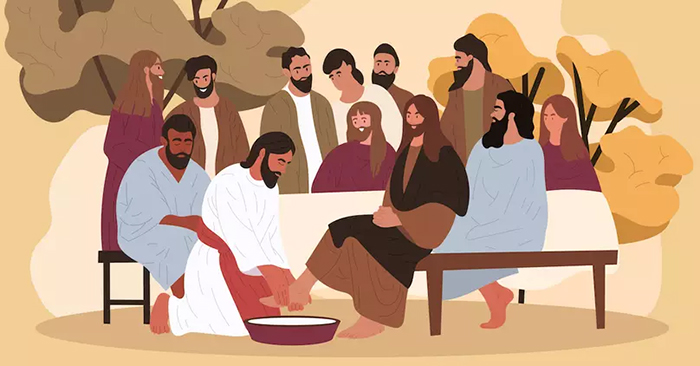
To glorify God is not primarily to achieve worldly greatness, recognition, or success. Jesus glorified the Father not through earthly power, but through fidelity. He glorified the Father in hidden years at Nazareth, in preaching truth, in healing the broken, in washing the feet of His disciples, in enduring rejection, and ultimately in offering Himself on the Cross. The Christian journey begins with the realization that glorifying God is found less in extraordinary accomplishments and more in faithful discipleship.
Every Christian receives a vocation and mission through baptism. While vocations differ, the fundamental “work” entrusted to all believers is the same: to know God, love Him, serve Him, and make Him known in the world. This work unfolds through daily acts of charity, prayer, repentance, forgiveness, and witness. Often, Christians search for dramatic signs of God’s plan while overlooking the sanctity hidden within ordinary responsibilities. Yet much of the work God gives His people consists precisely in the quiet faithfulness of daily life lived in grace. Jesus spent most of His earthly life in obscurity before beginning His public ministry, revealing that holiness is often formed in the unnoticed places of life.
The Christian faith journey involves learning to trust God even when His path includes uncertainty, sacrifice, or suffering. The temptation of every age is to define life in terms of personal ambition, comfort, or self-fulfillment. But discipleship calls believers to ask not merely, “What do I want?” but “What does God desire of me?” Such surrender is not passive resignation; it is an active offering of one’s life to God with confidence that His will leads to true life.
This journey cannot be lived by human strength alone. Jesus remained constantly united to the Father through prayer, and Christians are called to do the same. Prayer is not separate from the work God gives; it is what sustains and purifies that work. Through Scripture, the sacraments, especially the Eucharist, and continual conversion of heart, believers receive the grace necessary to persevere. Without communion with God, Christian service risks becoming mere activism. But when rooted in prayer, even ordinary actions become sacred offerings that glorify the Father.
At the end of life, every Christian hopes to stand before God having loved well, served faithfully, and remained steadfast in faith. The words of Jesus in John 17 become, in a sense, the desire of every disciple: to be able to say that one’s life, however imperfectly, sought to glorify the Father through obedience, love, and perseverance. This does not mean a life without failure or sin, for every Christian falls short. Rather, it means continually returning to God in repentance, trusting His mercy, and allowing grace to shape one’s life ever more fully into the likeness of Christ.