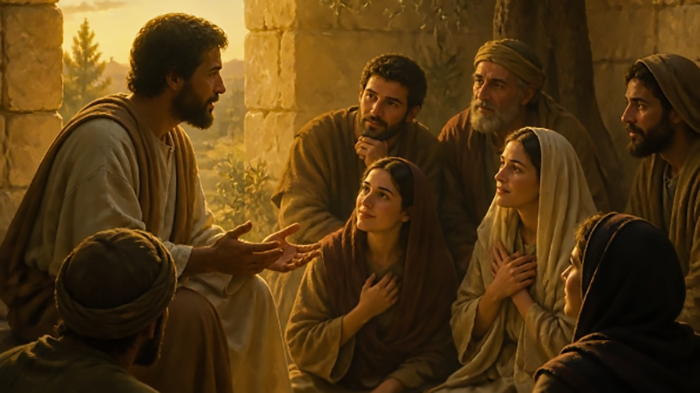
Every Sunday we hear the Word of God proclaimed, but there is a difference between hearing the Word and receiving the Word. St. Paul praises the Thessalonians because they received his preaching “not as the word of men, but, as it truly is, the word of God.” They recognized that although the message came through human voices, God Himself was speaking to them.
That same invitation comes to us at every Mass. The Scriptures are not merely ancient words about God. They are God’s living Word addressed to His people today. We can hear the readings and then move on with our lives, or we can pause and ask, “Lord, what are You saying to me through this Word?”
To receive the Word requires humility because it means being open to the possibility that God may challenge us as well as comfort us. His Word may affirm something in our lives, but it may also reveal something that needs to change. It may call us to forgive, to surrender, to trust, to serve, or simply to believe more deeply.
Paul tells us that the Word of God is “at work” in those who believe. God’s Word is not merely information we acquire; it is a living Word that can take root within us and gradually transform the way we see God, ourselves, and others. Sometimes that transformation happens immediately. Sometimes the Word remains quietly within us until a later moment when we suddenly understand why God placed those words before us.
The next time we hear the Scriptures proclaimed, perhaps we should listen with a slightly different question. Not simply, “What does this passage say?” but, “What is God saying to me?” And then, even more importantly, “What will I do with what God has said?”
The Word is proclaimed. We hear it. We receive it. We allow it to take root. And then, by God’s grace, the Word begins to become life within us.
Jesus is not telling us to become childish. He is inviting us to become childlike. What does it mean to be “childlike”?
A child knows that life is received before it is controlled. A child depends upon others, trusts those who love them, asks questions, receives gifts with wonder, and is willing to admit, “I don’t know.”
Perhaps this is what Jesus means when He tells us to “turn.” The turning is not simply changing our behavior. It is turning away from our insistence that we must manage, understand, control, and accomplish everything ourselves.
Ron Rolheiser offers a beautiful insight into what this childlikeness can mean for an adult. He reminds us that we cannot and should not return to the naïveté of childhood. Life has changed us. We have experienced disappointment, loss, suffering, relationships, responsibility, and the complexities of being human.
The goal, then, is not to become naïve again. It is to become innocent again after having lost our innocence.
Rolheiser describes this as a kind of “second naiveté” a childlike wonder that has passed through the experience of adult life. We know that life can wound us, yet we choose not to become cynical. We know that people can disappoint us, yet we choose to love. We know that we cannot control the future, yet we choose to trust God. We have learned how complicated life can be, yet we allow ourselves to be amazed by its goodness once again.
And perhaps this is why Jesus places a child in the middle of the disciples’ argument about who is greatest. The Kingdom is not entered by becoming more important, more powerful, or more self-sufficient. It is entered by becoming humble enough to receive.
Rolheiser tells the story of an elderly man who spent much of his life fiercely independent and self-sufficient. Only through the losses of his later years – his wife, his health, his independence, and his place in the world – did something begin to change within him. He became mellow enough to recognize that he needed to grasp a stronger hand. His point is profound: we can deliberately surrender our self-sufficiency to God, or life may eventually teach us the lesson.
The crowd informs Jesus that His mother and relatives are waiting outside. Instead of immediately going to them, Jesus turns toward His disciples and says, “Whoever does the will of my heavenly Father is my brother and sister and mother.” These words are not a rejection of Mary but a revelation of God’s greater plan.
Jesus announces the birth of a new family—not one formed by blood, but by faith and obedience. Mary herself is its first and greatest example. Before she became the Mother of Jesus, she became the servant of the Lord by saying, “Let it be done to me according to your word.” Her obedience made her the perfect disciple.
Through Christ’s saving work, we are invited into this same family. In Baptism we become adopted sons and daughters of the Father, sharing in the life of the eternal Son by grace. Jesus did not come merely to forgive sins or establish a religion; He came to gather a new humanity into the household of God.
His Kingdom is unlike every earthly kingdom. Earthly rulers gather subjects; Christ gathers brothers and sisters. Every act of obedience to the Father’s will deepens our communion with Christ and shapes us into His likeness.
Jesus’ invitation still reaches every believer: Do the Father’s will, and you will discover that you are not merely following Christ; you belong to His family, sharing in the inheritance of the children of God and the eternal reign of the Lord and Savior.
The prophet Micah speaks with remarkable simplicity. After Israel wonders what sacrifices might please God, the Lord reminds His people that they have always known what He desires. From the beginning, humanity was created not for endless ritual, but for a relationship of love with its Creator, a love expressed through justice, mercy, and humble obedience.
This invitation reaches back to the Garden of Eden, where Adam and Eve were called to receive creation as God’s gift and to walk in communion with Him. Throughout Israel’s history, God repeatedly called His people back to this same covenant relationship. Jesus would later summarize the entire Law with the two great commandments: to love God with all one’s heart and to love one’s neighbor as oneself. Though the circumstances changed across the centuries, God’s desire never did. Humanity was created to receive His love and reflect that love to the world.
If God’s will has always been known, why has humanity struggled to live it? The problem is not ignorance but the tendency of the human heart to place itself at the center. Pride tempts us to believe we are self-sufficient, capable of defining truth and goodness apart from God. The temptation in Eden was not simply to gain knowledge but to seek autonomy—to become our own authority rather than trust the One who created us.
Micah points us toward the remedy: “Walk humbly with your God.” Biblical humility is not thinking less of ourselves but living truthfully before God. It recognizes that life is a gift, that everything we possess comes from Him, and that our greatest freedom is found in communion rather than independence. Justice and mercy naturally flow from a heart that has learned to live in this truth.
Jesus Christ perfectly fulfills Micah’s words. He embodies justice, reveals mercy, and walks in complete humility before the Father. Where humanity grasped for greatness, Christ showed that true greatness is found in self-giving love. In Him we discover not only what God requires of us, but what humanity was always created to become: a people who receive God’s love, return it wholeheartedly, and walk humbly with Him.
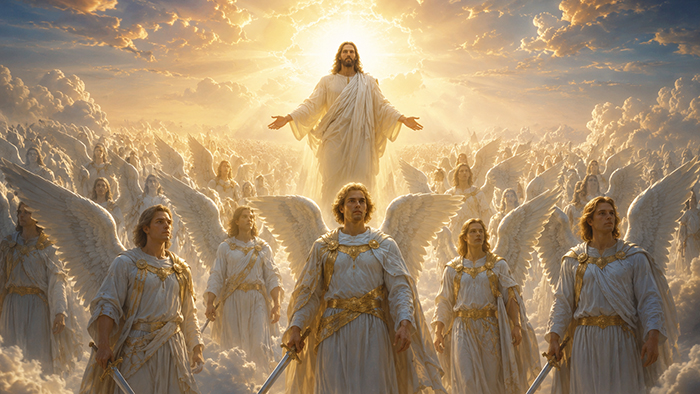
A natural question that arises from this verse in today’s reading from the Gospel of Matthew is: Whose angels are they? Is there a special class of angels belonging uniquely to Christ, or is Jesus expressing His divine authority over all the heavenly hosts?
Throughout the Old Testament, angels are consistently described as God’s angels—the heavenly servants who carry out God’s will. Yet in Matthew’s Gospel, Jesus repeatedly speaks of them as “his angels.” This language would have been astonishing to His Jewish audience. No mere prophet would claim authority over the armies of heaven. By saying, “The Son of Man will send his angels,” Jesus is quietly revealing that He exercises the authority that belongs to God Himself.
The New Testament consistently portrays the angels as subject to Christ. St. Paul writes that Christ has been exalted “far above every principality, authority, power, and dominion”. Likewise, St. Peter proclaims that Christ has gone into heaven “with angels, authorities, and powers subject to him”. Even at His birth, resurrection, and ascension, the angels minister to Him, not because they are a separate order, but because He is their Lord.
This authority becomes even clearer in the context of Matthew 13. Jesus says the angels will gather “out of his kingdom” those who do evil. In the Old Testament, the kingdom belongs to God alone. Here Jesus claims ownership of the kingdom and commands the angels who execute its final judgment. This is a remarkable claim to divine sovereignty.
There is also a beautiful spiritual insight here. During His earthly ministry, Jesus often appeared humble and hidden. He walked dusty roads, accepted rejection, and even submitted to death on the Cross. Yet He repeatedly lifted the veil just enough for His disciples to glimpse His true majesty. Statements such as “The Son of Man will send his angels” remind us that the carpenter from Nazareth is also the Lord of heaven’s hosts. The One who washes His disciples’ feet is the same One before whom countless angels stand in worship, ready to accomplish His will.
Jesus Christ is the divine King whose authority extends over heaven itself. The angels obey Him because He is the eternal Son of God, and at the end of time He will send them forth to bring history to its fulfillment.
These words from Jesus reveal not only His compassion but also the very heart of His mission. He does not call only the strong, the successful, or the righteous. He calls the weary—the ones carrying burdens too heavy to bear alone. In every age, His invitation extends to those exhausted by sin, grief, anxiety, disappointment, illness, responsibility, and the relentless pressures of daily life.
The burden Jesus speaks of is both external and internal. Some carry the weight of difficult circumstances: financial hardship, family struggles, physical suffering, or loneliness. Others carry invisible burdens: guilt over past sins, fear of the future, regret, shame, or the endless pursuit of proving themselves worthy.
During Jesus’ time, many people also felt crushed under a legalistic interpretation of the Mosaic Law, which had become burdened with countless regulations and expectations. Rather than as a path to freedom and covenantal relationship with God, many experienced the Law as an impossible standard. Jesus came not to abolish the Law but to fulfill it, revealing that true righteousness flows from a heart transformed by love rather than mere external observance.
The “rest” Jesus offers is far deeper than physical relaxation. The Catholic tradition understands this rest as the peace that comes from reconciliation with God. Sin unsettles the human heart because it separates us from the One for whom we were created. Christ restores that relationship through His saving death and Resurrection. As St. Augustine famously wrote, “Our hearts are restless until they rest in You.” Every human longing—for happiness, security, love, meaning, and peace—ultimately finds its fulfillment in communion with God.
This invitation also echoes one of the great themes of Sacred Scripture: God’s desire to dwell with His people and lead them into His rest. The Sabbath itself pointed toward more than a weekly cessation from work. It foreshadowed the deeper spiritual rest found in God’s presence. The Letter to the Hebrews teaches that this promise of entering God’s rest remains open to believers today. Every Sunday, as Christians gather for the Eucharist, they enter sacramentally into that divine rest, laying aside the burdens of the week and encountering Christ, who nourishes them with His Word and His Body and Blood.
Jesus’ words point beyond the present life to the eternal rest promised in heaven. Every earthly experience of peace is only a foretaste of the perfect communion that awaits those who persevere in faith. The rest Christ offers begins now through grace but reaches its fullness only in the beatific vision, where every tear is wiped away and every burden is finally laid down.
At first hearing, these words from Jesus may seem exclusive, as though He is limiting access to God. In reality, they are an invitation into the deepest mystery of the Christian faith. Jesus is not closing the door to the Father; He is revealing that He Himself is the door through which the Father is truly known.
Throughout the history of salvation, God gradually revealed Himself to His people. He spoke through creation, entered into covenant with Abraham, revealed His name to Moses, and called Israel back to Himself through the prophets. Each revelation disclosed something true about God, but each was also a preparation for something greater.
The Letter to the Hebrews beautifully summarizes this progression: “In many and various ways God spoke of old through the prophets, but in these last days He has spoken to us by a Son.” Jesus is not simply another messenger bringing news from God. He is the eternal Son who comes from the Father and shares fully in the Father’s divine nature.
Some may wonder about Jesus’ words, “to anyone to whom the Son wishes to reveal Him.” Does this mean that Christ chooses only certain people while excluding others? The Church understands these words in light of God’s universal desire for salvation. Scripture tells us that God desires all people to be saved and to come to the knowledge of the truth. Christ’s invitation is extended to every person. Yet revelation is also a gift that must be freely received.
Throughout the Gospels, those who approach Jesus with humility, faith, and openness receive what He longs to give, while those whose hearts remain closed fail to recognize who stands before them. Immediately after speaking these words, Jesus extends His beautiful invitation: “Come to me, all you who labor and are burdened.” The invitation is universal; the response must be personal.
For every believer, this passage has profound spiritual significance. It reminds us that the Christian life is not primarily about acquiring religious knowledge but about growing in relationship with Jesus Christ. As we encounter Him through Sacred Scripture, the sacraments, prayer, and the life of the Church, He gradually unveils the Father’s love more deeply within our hearts. Our faith becomes less about knowing facts about God and more about living as beloved sons and daughters in communion with Him.
As Jesus looked upon the crowds, He did not see strangers or statistics; He saw people who were “troubled and abandoned, like sheep without a shepherd.” His heart was moved with compassion, and from that compassion came this enduring invitation to His disciples. The problem was not that God had failed to prepare the harvest. The fields were already ripe. What was needed was faithful men and women willing to enter those fields in His name.
The image of the harvest is deeply rooted in Scripture. In the Old Testament, harvest represented God’s blessing and the gathering of His people. Jesus now reveals that the true harvest is humanity itself—people longing, often unknowingly, for the truth, mercy, and saving love of God. The harvest remains abundant because the human heart still hungers for God.
This passage reminds us that every baptized Christian shares in Christ’s mission. While some are called to ordained or consecrated life, every disciple is called to labor in the Lord’s vineyard. Parents form their children in the faith. Teachers lead others to truth. Parish volunteers serve through hidden acts of charity. Friends and neighbors bear witness to Christ through lives of charity, mercy, and hope.
The scarcity of laborers is therefore not simply a shortage of clergy; it is a reminder that every Christian must discern how God is calling them to participate in His work. The Church flourishes when each member recognizes that faith is not merely something to receive but something to share and live with urgency.
These words challenge us to look upon our own communities through the compassionate eyes of Christ. Where do we see people searching for hope? Who has drifted from the Church? Who has never encountered the Gospel in a personal way? These are the fields waiting to be harvested. Our first response is prayer, asking the Lord to raise up holy vocations and courageous disciples. Our second response is to listen carefully, for the laborer God desires to send may very well be us—here, now.
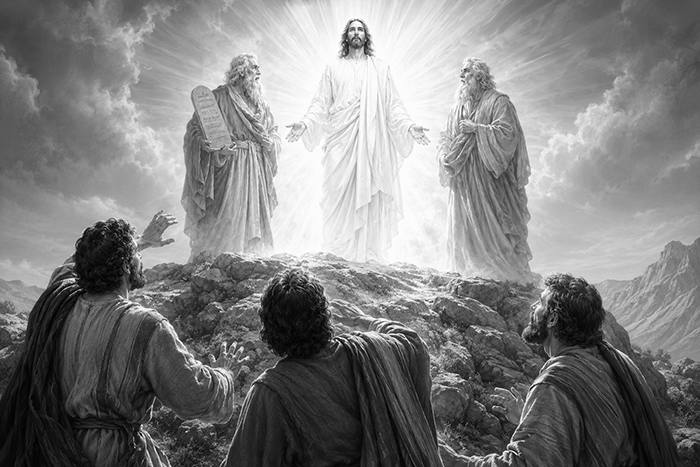
Jesus knew that His disciples would soon witness the scandal of the Cross. Before leading them into the darkness of Calvary, He led Peter, James, and John up a mountain where His hidden glory was revealed. His radiant face and dazzling garments unveiled what had always been true: Jesus is the eternal Son of God.
Standing beside Him were Moses and Elijah, representing the Law and the Prophets. Their conversation about His coming “exodus” revealed that His death in Jerusalem was not a failure but the fulfillment of God’s saving plan. The first Exodus freed Israel from slavery in Egypt; Christ’s Passion would bring about a new Exodus, freeing humanity from the slavery of sin.
Peter wanted to remain on the mountain, but discipleship cannot remain in moments of spiritual consolation. Faith must descend into everyday life, carrying the light of Christ into a world marked by suffering and hope. Then the Father’s voice spoke from the cloud: “This is my beloved Son…Listen to Him.” The command is timeless. We are called to trust Christ not only in moments of glory, but also when He leads us along the way of the Cross.
Every celebration of the Mass reflects this mystery. We ascend into God’s presence, listen to His Son in the Scriptures, encounter Christ in the Eucharist, and then return to the world transformed for mission. The mountain prepares us for the valley; worship prepares us for witness.
The Transfiguration reminds us that the glory of Christ is not separate from the Cross but revealed through it. Whenever life becomes difficult, we remember the mountain and trust that the One who walks with us in suffering is also the Lord of eternal glory. Our task is simple, yet lifelong: listen to Him, follow Him, and allow His glory to shine through our lives.
In Paul’s Letter to the Romans, he is not condemning the human body, nor is he teaching that Christians should despise physical life. Rather, he is describing two fundamentally different ways of living—one centered on the self and one centered on God.
To live according to the flesh is to make oneself the ultimate reference point for life. In Paul’s language, “the flesh” refers not simply to our physical bodies but to our fallen human nature apart from God’s grace. It is life governed by self-interest, pride, fear, pleasure, power, resentment, or the endless pursuit of control. A person living according to the flesh may appear outwardly successful, moral, or even religious, but inwardly remains centered on “my will” rather than God’s will. Such a life gradually closes the heart to God and others. It promises freedom but often leads to anxiety, addiction, loneliness, and spiritual death because the soul was created for communion with God, not independence from Him.
To live according to the Spirit, on the other hand, is to allow the Holy Spirit to shape one’s thoughts, desires, decisions, and relationships. This does not mean becoming perfect overnight or never experiencing temptation. It means allowing God’s grace to transform the heart little by little. The Christian begins asking different questions: What is God asking of me? How can I love more faithfully? How can I forgive? Where is Christ leading me today? Life in the Spirit is characterized by humility, trust, charity, self-control, mercy, and hope. It is not merely about avoiding sin but about becoming more like Christ.
The difficulty is that living by the flesh feels natural, while living by the Spirit requires conversion. From our earliest years, we instinctively protect ourselves, seek comfort, compare ourselves with others, and satisfy immediate desires. Our culture often reinforces these instincts, celebrating self-expression and self-gratification as the highest goods. Because of this, many people mistake the impulses of the flesh for genuine freedom. They assume that following every desire is authentic living, when in reality it often becomes a new form of slavery.
Living by the Spirit, on the other hand, is also difficult to understand because God’s way often appears contrary to ordinary human logic. The Spirit teaches that greatness comes through service, that strength is found in humility, that forgiveness is more powerful than revenge, that generosity enriches more than accumulation, and that surrender to God brings deeper freedom than self-rule. These truths are not easily grasped because they must be learned through experience, prayer, and grace. The Spirit forms us gradually, often through trials, disappointments, and acts of daily fidelity rather than dramatic moments.
This transformation from living in the flesh to living in the Spirit is rarely instantaneous. It is the lifelong work traditionally called sanctification. Every act of repentance, every sincere confession, every choice to forgive instead of resent, every hidden act of charity, and every moment of faithful prayer is another step away from life according to the flesh and toward life in the Spirit. We discover that holiness is not simply avoiding evil but allowing Christ to live more fully within us.
Paul’s words today offer encouragement as much as challenge. Most believers recognize both realities within themselves. We know the attraction of selfishness, comfort, and pride, yet we also experience the quiet prompting of the Holy Spirit calling us toward something greater. The Christian life is lived in that tension. The measure of holiness is not that we never struggle with the flesh, but that we increasingly choose to cooperate with the Spirit. Each day presents countless opportunities to die a little to self so that the life of Christ may become more visible in us.