
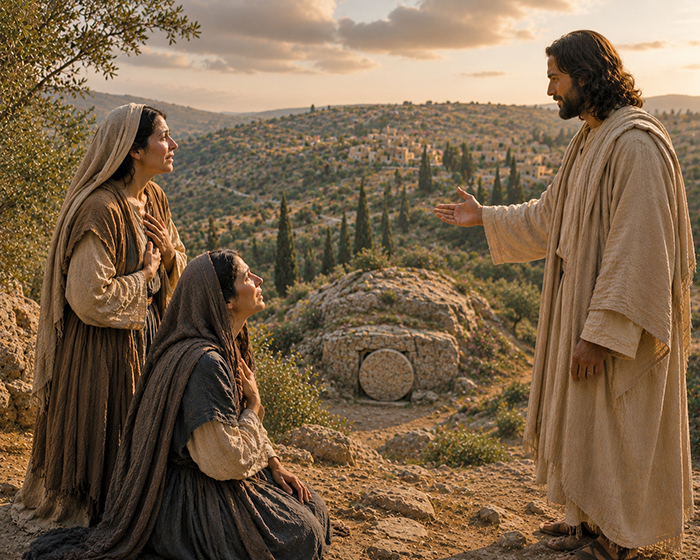
Throughout the Gospels, Martha, Mary, and Lazarus are presented as among Jesus’ closest personal friends. Unlike the crowds who followed Him or even many of His disciples, this family welcomed Jesus into their home in Bethany, where He found rest, hospitality, and genuine friendship.
The Evangelist John uniquely emphasizes this bond, writing simply, “Now Jesus loved Martha and her sister and Lazarus”. Jesus shared meals with them, taught in their home, accepted Mary’s loving devotion, encouraged Martha’s faith, and openly wept at Lazarus’ tomb, revealing both His divine compassion and His deep human affection.
“I am the resurrection and the life” is one of the most profound revelations Jesus ever makes about Himself. Martha hoped He would arrive in time to prevent Lazarus from dying. Instead, Jesus arrived after death had already claimed him. His delay was intentional, not because He lacked compassion, but because He desired to reveal a greater truth. Healing could have prolonged Lazarus’ earthly life, but resurrection would reveal God’s power over death itself.
Every miracle of healing in the Gospels was temporary. Those who were healed eventually died again. Lazarus himself would one day return to the grave. Jesus did not come simply to delay death; He came to defeat it. By calling Lazarus from the tomb after four days, Jesus revealed that He is not merely one who gives life; He is Life.
The miracle prepares His disciples for the greater miracle of His own Resurrection, where death would not merely be interrupted but forever conquered. The invitation to every believer remains the same as it was for Martha: not simply to believe that Jesus can help us in this life, but to believe that in Him death itself has lost its final victory.
