
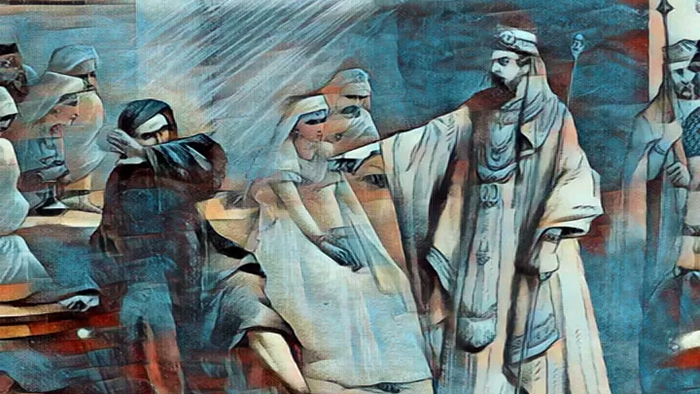
Jesus speaks these words in the Parable of the Wedding Feast. A king prepares a wedding banquet for his son and sends servants to summon the invited guests. Those first invited refuse to come; some even mistreat and kill the servants. The king then sends his servants into the streets to invite everyone they can find—“bad and good alike”—until the wedding hall is filled.
The banquet represents the Kingdom of God, prepared by the Father for His Son. The first invited guests represent those who had already received God’s covenantal promises but refused to recognize and receive the Messiah. The invitation then goes outward, gathering people from every road and every circumstance.
This is an astonishing image of grace: entrance into the banquet is not earned by social standing, moral achievement, or religious reputation. The guests are there because the king invited them.
To wear the wedding garment, therefore, is to be clothed in Christ. It means that the invitation of grace has moved beyond our ears and entered our hearts, choices, relationships, and way of life.
To wear the garment is to live in an ongoing state of conversion. It is to confess our sins, receive mercy, practice forgiveness, serve others, resist injustice, and allow Christ’s love to reshape our desires. The wedding garment is Christ’s love becoming visible in the life of the person who has accepted His invitation.
The king’s question is ultimately addressed to every disciple: “How is it that you came in here without a wedding garment?” Jesus is asking whether our lives correspond to the invitation we claim to have accepted.